


How to Treat Hyperpigmentation on Black Skin
Key Takeaways
-
Hyperpigmentation on Black skin is more common, deeper, and slower to fade because melanocytes in Fitzpatrick IV–VI skin are larger, more active, and easily triggered by inflammation.
-
The 4 main types are post-inflammatory hyperpigmentation (PIH), melasma, sunspots, and acanthosis nigricans. Each needs a slightly different approach, but the foundation is the same.
-
The only treatment plan that works long-term has 4 layers: stop the trigger, block tyrosinase, wear daily SPF 50, and support the skin barrier with ceramides.
-
Avoid hydroquinone, glycolic acid, strong prescription retinoids, and physical scrubs. All four can trigger more pigmentation than they fade on darker skin.
-
Realistic timelines: 8–12 weeks for surface PIH. 3–6 months for stubborn dark spots. 6–12 months for melasma. Consistency beats intensity every time.
Why Standard Hyperpigmentation Advice Fails Black Skin
Hyperpigmentation is the single most common skin concern in Black patients. Acne marks that refuse to fade. Dark patches on the cheeks and forehead. Stubborn discolouration around the mouth, on the neck, and on the body where clothes rub.
Most of the standard advice written about treating hyperpigmentation was developed for lighter skin tones. The "all skin types" label usually means tested on Caucasian skin and exported to everyone else. The actives, the percentages, and even the timelines do not apply to Black skin in the same way. Worse, some of the most commonly recommended treatments can make pigmentation significantly worse on melanin-rich skin.
This guide covers why hyperpigmentation behaves differently on Black skin, what actually works, what to avoid, and how to build a routine that fades dark spots without triggering new ones.
Why Black Skin Is More Prone to Hyperpigmentation
Five biological differences make Black skin more reactive to pigmentation triggers.
-
Larger, more active melanocytes. Melanocytes are the cells that produce pigment, and on Black skin, they are larger and respond more readily to almost anything: sun, heat, friction, inflammation, even hormones. Think of them like overprotective security guards. If you aggravate them, they don't just glow. They attack. A small bump that would heal invisibly on lighter skin can leave a dark mark on Black skin that hangs around for six months.
-
Faster, easier triggering. Once melanocytes are activated, they transfer melanin parcels readily to the surrounding skin cells (the keratinocytes). One spot or scratch ends up creating a patch of discolouration much larger than the original injury.
-
Skin that is easier to irritate. And on melanin-rich skin, irritation is the single biggest driver of new pigmentation.
-
Thicker skin. This makes it harder for active ingredients to penetrate to the deeper layers where pigment sits, which is part of why results take longer.
-
A more reactive, ceramide-poor barrier. Black skin loses ceramides faster than Caucasian skin, so the barrier is more easily disrupted. When the barrier is compromised, inflammation follows.
The golden rule: On Black skin, anything that causes inflammation causes pigmentation. This single principle should govern every product used on the face.
How a Dark Mark Forms
A dark mark doesn't appear out of nowhere. It's the end of a set sequence inside your skin, from the first trigger to the pigment you see on the surface. Here's what happens at each stage:

The 4 Types of Hyperpigmentation on Black Skin
Post-Inflammatory Hyperpigmentation (PIH). The most common type by a wide margin. PIH is the dark mark left behind after acne, eczema, ingrown hairs, razor bumps, cuts, burns, or any kind of skin trauma, and it often outlasts the original problem by months. The marks are flat and range from brown to dark brown to purplish. PIH gets triggered by inflammation, picking, harsh exfoliation, and reactive skincare. One thing worth flagging here: on oily acne-prone skin of colour, acne typically leaves three blemishes behind, not one. The acne lesion, red marks (post-inflammatory erythema, or PIE), and brown marks (PIH). Each is treated differently.
Melasma. Hormonal hyperpigmentation triggered by pregnancy, birth control, or stress. Melasma is chronic and recurs without consistent treatment and SPF. The patches are symmetrical, brown or grey, and typically appear on the cheeks, forehead, upper lip, or jawline. Visible light from screens and sun exposure both make it worse, which is why "blue light" is not just a marketing term when you're prone to melasma.
Sun-Induced Hyperpigmentation (Sunspots). Repeated UV exposure concentrates melanin into flat dark spots on the face, neck, chest, hands, and arms. Because skin of colour tends to tan rather than burn, sun exposure deepens existing pigmentation alongside creating new spots. Daily mineral SPF 50 is the only thing that prevents this.
Acanthosis Nigricans. Velvety, thickened dark patches that show up in skin folds: the neck, armpits, groin, or under the breasts. Unlike the other three types, this one can be a sign of an underlying health issue like insulin resistance or type 2 diabetes. See a doctor for blood sugar testing before treating it as a cosmetic skincare concern.
How to Treat Hyperpigmentation on Black Skin: The 4-Step Method
Every treatment plan that actually works on darker skin has the same four layers. Skip any one of them and the others stop working.
Step 1: Stop the Trigger
Before any active ingredient can fade existing dark spots, new ones have to stop forming. Most patients spend years on increasingly aggressive actives without doing this step first, which is why their pigmentation never resolves.
-
Treat the underlying cause (acne, eczema, ingrown hairs).
-
Stop picking, popping, or scratching. Hardest piece of advice in skincare. Also the one with the biggest impact.
-
Strip fragrance, essential oils, and denatured alcohol out of your routine. The Dr V approach to this is called NAFE-safe: no alcohol, no fragrance, no essential oils. Fragrance is the number one cause of contact dermatitis. Essential oils are skin sensitisers. Denatured alcohol is drying. All three risk inflammation, and on melanin-rich skin inflammation means new pigmentation.
-
Swap physical scrubs for gentle chemical exfoliation using large AHA molecules (mandelic and lactic acid), for example, Exfoliate to Glow.
-
Wear daily mineral SPF 50, such as InZincable SPF50.
Done properly, this step on its own fades a meaningful amount of mild PIH within three months, before you've even introduced an active ingredient.
Step 2: Block Tyrosinase
Tyrosinase is the enzyme that triggers melanin production in your skin. Inhibiting it helps slow down the formation of new pigmentation and dark spots. The mistake most brands make is chasing one high-strength hero active and hoping it does the job. On Black skin, one strong active ingredient causes more irritation than fading. The approach that works is layering several tyrosinase inhibitors at moderate concentrations, hitting the pigment pathway at different points, which creates compound results without the irritation.
The tyrosinase-inhibiting ingredients that work safely on Black skin:
-
Kojic acid dipalmitate. The best-tolerated form of kojic acid for skin of colour. Fades pigmentation and dark spots.
-
Alpha arbutin. Blocks excess melanin production.
-
Liquorice root extract (glabridin). Brightens skin and calms inflammation at the same time.
-
Uva ursi extract. Reduces melanin formation.
-
Octadecenedioic acid. Suppresses excess pigment production.
-
THD vitamin C (tetrahexyldecyl ascorbate). A stable, fat-soluble vitamin C that brightens and interrupts melanin formation. The right form of vitamin C for melanin-rich skin.
-
Sodium ascorbyl phosphate. Evens skin tone, adds radiance.
-
Azelaic acid. Treats pigmentation, reduces inflammation, and is pregnancy-safe.
-
Tranexamic acid. Fades stubborn melasma and dark patches.
-
Niacinamide. Reduces melanin transfer from melanocytes to keratinocytes, and strengthens the barrier.
The strongest approach combines four or more tyrosinase inhibitors from different points in the pigment pathway, at optimal concentrations. This is what creates compound results without irritation, not one high-strength "hero" active. The Dr Vantia Rattan Facial Pigmentation Kit was formulated on exactly this principle, combining ten tyrosinase inhibitors in a single nightly protocol designed for skin of colour.
Step 3: Wear Daily SPF 50
Without sun protection, every other step in this routine is wasted. UV light and visible light from screens both activate melanocytes, and on Black skin a single afternoon in the sun undoes weeks of treatment.
Use a broad-spectrum mineral SPF 50 with no white cast. InZincable SPF50 was formulated specifically for darker skin tones. Wear it every single day, indoors and on cloudy days included. Reapply every two hours when you're outdoors. For melasma that flares around the eyes, cheekbones, and temples, oversized UV-blocking sunglasses like the Dr Vanita Rattan Anti-Melasma Sunglasses give you protection that sunscreen alone can't.
Step 4: Support the Skin Barrier
Skin of colour has less ceramides than Caucasian skin. A compromised barrier makes pigmentation deeper, makes the skin more sensitive, and turns active ingredients into irritants they wouldn't otherwise be. Look for ceramide NP, squalane, niacinamide, centella asiatica, and hyaluronic acid, all of which are built into Cera Pep Moisturiser.
Ingredients and Treatments to Avoid on Black Skin
-
Hydroquinone. Dr V doesn't use hydroquinone in any of her formulations. Long-term use on Black skin is associated with ochronosis, a permanent blue-grey discolouration, and it causes rebound hyperpigmentation when stopped. If a dermatologist has put you on hydroquinone cycles for years, that protocol is outdated. Modern tyrosinase inhibitors (alpha arbutin, kojic acid, tranexamic acid) deliver comparable brightening with a far better safety profile.
-
Glycolic acid. Glycolic acid is the smallest AHA molecule, so it penetrates quickly and unevenly. On skin of colour that uneven penetration creates localised hot spots of irritation, which triggers more PIH than the acid is fading. For chemical exfoliation, the larger AHA molecules (mandelic and lactic, as in Exfoliate to Glow) work evenly and don't set off the same response.
-
Strong prescription retinoids without barrier prep. Prescription tretinoin causes significant irritation on darker skin, and that irritation drives PIH. The standard "purge" everyone is told to push through is, on melanin-rich skin, the inflammation that's about to leave dark marks for the next six months.
-
Physical scrubs. Apricot kernels, walnut shells, abrasive beads. They cause micro-tears. Micro-tears cause inflammation. Inflammation causes pigmentation. The chain is short and reliable.
-
Lemon juice and DIY remedies. Lemon is photosensitising and acidic, and on Black skin it causes burns and darkening rather than the brightening Pinterest promised. Same warning for any citrus essential oil. If a product smells like a fruit bowl, put it back.
-
Mercury-based lighteners. Found in unregulated imported products. Linked to kidney damage and severe rebound pigmentation. There is no safe way to use these.
Morning and Evening Routines for Hyperpigmentation on Black Skin
Morning Routine
-
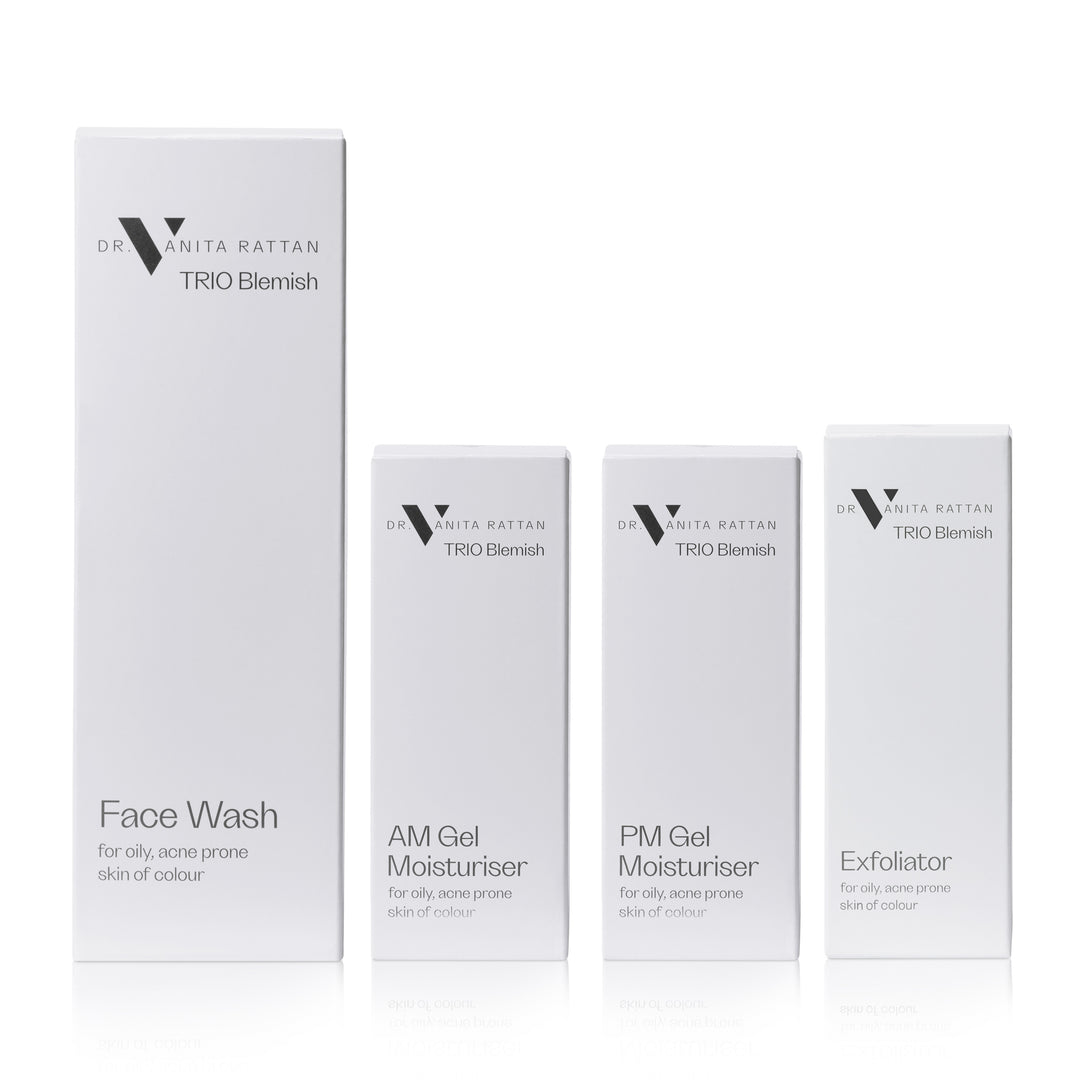
Fragrance-free cleanser. Micellar Gel Wash for normal or dry skin, or TRIO Blemish Face Wash for oily.
-
Hydrating, non-fragranced toner, anti-oxidants and anti-pigmentation ingredients. Super Hydrating Toner.
-
Brightening vitamin C serum. Vitamin C Glow Serum, which is tyrosinase-inhibiting and formulated for skin of colour.
-
Ceramide moisturiser. Cera Pep Moisturiser
-
Mineral SPF 50 with blue light protection, no white cast. InZincable SPF50
Evening Routine
-
Oil Melting Cleanser to remove SPF and makeup.
-
Fragrance-free second cleanse with Micellar Gel Wash.
-
Super Hydrating Toner.
-
Targeted treatment. The Dr Vanita Rattan Facial Pigmentation Kit., applied about two hours before bed.
-
Ceramide moisturiser. Cera Pep Moisturiser.
On nights when the pigmentation kit isn't being used, Exfoliate to Glow (mandelic plus lactic) gives you chemical exfoliation without the inflammation that physical scrubs cause.
Vitamin C in the morning. Active pigmentation treatment in the evening. Keep them in separate routines like stubborn siblings and you avoid the ingredient conflicts that destroy both when they're layered together.
How Long Does It Take to Fade Hyperpigmentation on Black Skin?
|
Type of Pigmentation |
Realistic Timeline |
|
Surface PIH (post-acne marks) |
8 to 12 weeks |
|
Deep PIH (older marks) |
3 to 6 months |
|
Sunspots |
3 to 6 months |
|
Melasma |
6 to 12 months (often recurs) |
|
Dermal pigmentation (deep) |
12 months plus, sometimes permanent |
Pigment usually sits across roughly six skin cell cycles, which is why long-standing marks tend to need consistent tyrosinase inhibition for six months or longer before they really shift. Black skin runs longer on these timelines than mainstream beauty content suggests. Cell turnover is naturally slower, pigment deposits deeper into the dermis, and melanocytes get re-triggered easily, so new pigment forms while old pigment is still fading.
For benchmarking, an independent clinical study of the Dr Vanita Rattan Facial Pigmentation Kit (44 participants) found 70% of users saw a significant reduction in hyperpigmentation after 12 weeks. The routine that wins isn't the most aggressive one. It's the one you can actually stick to for six months without irritation forcing you to abandon it.
When to See a Dermatologist
Most hyperpigmentation can be treated at home with the right routine. See a dermatologist if:
-
Melasma hasn't improved with topical treatment after 3 to 6 months.
-
Deep dermal pigmentation hasn't faded after a year.
-
You suspect acanthosis nigricans (velvety patches in skin folds).
-
A dark spot has changed recently in shape, size, or colour (to rule out melanoma).
-
You're considering chemical peels, laser, or microneedling.
For laser and chemical peel procedures, only book a practitioner with documented experience treating Fitzpatrick IV to VI skin. Standard lasers work by targeting the contrast between a dark spot and the lighter skin around it. On darker skin there's less contrast to begin with, so the energy scatters and damages healthy melanocytes, causing permanent darkening or lightening that's harder to fix than the original pigmentation ever was. The wrong laser on Black skin causes more damage than the problem it was treating.
Frequently Asked Questions
Can hyperpigmentation on Black skin be permanent? Most can be significantly faded with the right protocol and enough time. The exceptions are damage caused by harsh treatments. Long-term hydroquinone causing ochronosis, or steroid creams causing permanent thinning, are the two main culprits. Treating gently from the start is the safest approach.
Does hyperpigmentation go away on its own? Mild PIH can fade on its own over 12 to 24 months if nothing new triggers it. On Black skin, daily UV exposure usually replaces fading pigment with new pigment, so the marks appear to stay even when they're slowly turning over underneath. Daily SPF and active treatment speed the process up considerably.
What is the difference between PIH and PIE on Black skin? On oily acne-prone skin of colour, acne typically leaves three blemishes behind, not one. The acne lesion, red marks, and brown marks.
PIH (post-inflammatory hyperpigmentation) is the brown, dark brown, or purplish mark left after acne, eczema, or skin trauma. It's caused by excess melanin from triggered melanocytes, and it responds to tyrosinase inhibitors (kojic acid dipalmitate, alpha arbutin, liquorice root, tranexamic acid), daily SPF 50, and gentle exfoliation with mandelic or lactic acid.
PIE (post-inflammatory erythema) is the red, pink, or red-purple mark left after the same triggers. It's caused by damaged or dilated capillaries near the skin's surface, not by melanin. It responds to anti-inflammatories, niacinamide, vascular healing time, and avoiding heat, friction, and harsh actives. A tyrosinase-inhibiting pigmentation kit will do nothing for red marks because they aren't a melanin problem.
Is hydroquinone safe for Black skin? Long term use of hydroquinone on Black skin is associated with ochronosis (a permanent blue-grey discolouration) and causes rebound hyperpigmentation when stopped. Try tyrosinase inhibitors such as alpha arbutin, kojic acid, and tranexamic acid which offer comparable brightening with a significantly better safety profile, and they don't carry the ochronosis risk.
Can hyperpigmentation be treated while pregnant? Yes, but only with pregnancy-safe ingredients. Retinoids, hydroquinone, and high-strength acids are off the table. Safe options include niacinamide, bakuchiol, vitamin C derivatives like tetrahexyldecyl ascorbate, and azelaic acid. Always check with a healthcare provider first.
What is the strongest hyperpigmentation treatment for Black skin? Strongest is the wrong question for Black skin. Aggression triggers the inflammation that causes pigmentation in the first place. The protocols that work after 40,000 clinical cases combine four or more different tyrosinase inhibitors at moderate concentrations, daily SPF 50, and a barrier-supporting moisturiser. Consistency over months does the work.
Will sunscreen alone fade hyperpigmentation? Sunscreen alone won't actively fade existing pigmentation, but without it nothing else will work. Daily broad-spectrum mineral SPF 50 is the foundation that makes every other active ingredient effective.
Can vitamin C and a pigmentation kit be used at the same time? Yes, in separate routines. Use vitamin C serum in the morning under SPF, and the pigmentation kit at night. They target pigmentation through different mechanisms and work well together as long as they're separated.
Why does hyperpigmentation get worse in summer? UV and heat both stimulate melanocytes, so even brief sun exposure without SPF undoes weeks of treatment. In summer, reapply SPF every two hours when you're outdoors and use UV-blocking sunglasses around the eyes if you're prone to melasma.
Why is glycolic acid not recommended for Black skin? Glycolic acid is the smallest AHA molecule, so it penetrates quickly and unevenly. That uneven penetration creates localised hot spots of irritation, which triggers fresh PIH. Larger AHA molecules like mandelic and lactic acid exfoliate more evenly and are far better tolerated on skin of colour.
The Bottom Line
There isn't a miracle product for hyperpigmentation on Black skin. There's a system that respects the biology of melanin-rich skin: stop the triggers, block tyrosinase from several angles at once, wear proper SPF every day, and feed the barrier with ceramides. Most hyperpigmentation, including severe PIH and stubborn melasma, can be significantly improved with a consistent routine over three to twelve months.
The thing the wider beauty industry won't say out loud: the products being sold to skin of colour for pigmentation are mostly products that were formulated for fair skin and then rebranded. They're not built for darker biology and they don't perform like they're built for darker biology. Products built specifically for skin of colour do the work that those products were supposed to.
Ready to treat hyperpigmentation properly? Shop the Dr Vanita Rattan Facial Pigmentation Kit.
 Back to Dr. V's Skin of Colour Blog