


How to Fade Post-Acne Marks on Skin of Colour: PIH vs PIE
The breakout finally clears, and then a map of every spot is left behind. For skin of colour, that map is often the part that lingers, and it can feel more frustrating than the acne itself.
The reassuring news is that post-acne marks are treatable once you know which type of mark you are dealing with.
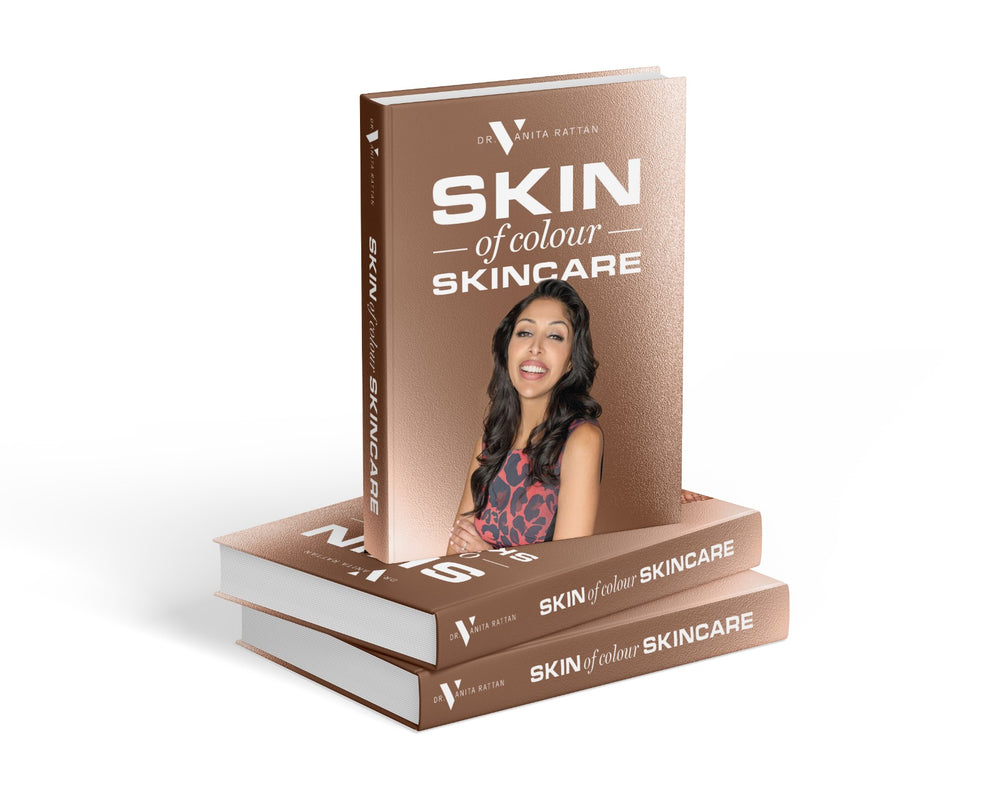
Dr Vanita Rattan, a doctor and cosmetic formulator who specialises in skin of colour, puts it plainly:
With us, the pigmentation is often more frustrating and irritating than the actual acne, which tends to be quite short-lived.
Start by identifying the mark type. Brown marks, also known as PIH, are treated with tyrosinase inhibitors such as alpha arbutin, vitamin C, niacinamide and retinaldehyde, plus daily mineral SPF. Red marks, also known as PIE, are treated with azelaic acid and niacinamide. For melanin-rich skin, keep the routine gentle, barrier-supporting and consistent, and avoid harsh treatments that can trigger more inflammation and more pigmentation.
PIH vs PIE: what is the difference?
Post-acne marks fall into two main types, and telling them apart is the most important step because the wrong treatment can waste months.
For skin of colour, PIH is usually the bigger and longer-lasting concern. On lighter skin, the main leftover from acne tends to be redness. On melanin-rich skin, it can become an ongoing pigmentation process, and those brown marks can take months, sometimes years, to fade if left unmanaged.
How can I tell if my mark is PIH or PIE?
Press gently on the mark.
If the colour stays put under pressure, it is more likely to be PIH, a pigment-based brown mark.
If it briefly turns pale and the colour then floods back, it is more likely to be PIE, a vascular red mark.
Many people have both at once, which is why a combined routine often makes sense.
Why does skin of colour get more post-acne pigmentation?
Because melanocytes, the cells that produce the pigment melanin, are more reactive in deeper skin.
As Dr Rattan explains:
Our melanocytes are large and they are easily triggered. One scratch, one bite or one burn, and we hyperpigment.
Here is the chain reaction behind an acne mark:
This is why controlling acne early and gently matters so much for melanin-rich skin. Less inflammation means fewer marks. It also explains why aggressive treatment can backfire, because harsh treatment creates more inflammation, and more inflammation creates more pigmentation.
How do you treat brown marks, or PIH, on skin of colour?
Brown marks are treated by slowing excess melanin production with tyrosinase inhibitors and protecting the skin with daily mineral SPF.
The body converts the amino acid tyrosine into melanin using an enzyme called tyrosinase. Control that enzyme, and you help slow the rate at which new pigment is made.
The best tyrosinase inhibitors for skin of colour
These are some of the ingredients Dr Rattan looks for and formulates with:
A single tyrosinase inhibitor may help, but stubborn pigmentation often needs a more complete approach. Pigmentation has many pathways, so combining multiple pigmentation-focused ingredients can give better support than relying on one ingredient alone.
Start simple before using stronger pigmentation products
Do not overload your skin with too many actives at once. Start with a simple, consistent routine and give your skin time.
For newer post-acne marks, a routine with gentle cleansing, vitamin C, niacinamide, barrier support and daily SPF may be enough.
For stubborn or long-standing brown marks, a more targeted pigmentation routine may be needed.
How do you treat red marks, or PIE, after acne?
Red marks respond best to anti-inflammatory ingredients such as azelaic acid and niacinamide.
Azelaic acid helps calm the look of redness and supports acne-prone skin. Niacinamide helps support the barrier and improve the look of uneven tone. Start gently, especially if your skin is acne-prone or easily irritated.
Avoid layering too many strong actives together. Once you add a third or fourth active product, the skin can become irritated, and irritation can trigger more pigmentation in skin of colour.
Why is sunscreen essential for fading acne marks?
Because UV exposure can deepen existing marks and undo your progress.
Without daily SPF, dark marks can become darker and take longer to fade. This is especially important for melanin-rich skin because pigmentation is triggered by UV exposure and visible light.
For skin of colour treating pigmentation, Dr Rattan recommends a mineral SPF50. Zinc oxide is a mineral sunscreen filter and is often preferred for sensitive or pigmentation-prone skin.
The challenge has always been finding a mineral SPF that works on deeper skin tones without leaving a visible white cast. This is why InZincable SPF50 was formulated specifically for Black and brown skin tones.
What should you avoid when treating post-acne marks on dark skin?
Avoid anything that triggers irritation or inflammation, because on skin of colour, inflammation can lead to more pigmentation.
Common mistakes include:
Dr Rattan formulates her products to be NAFE-safe, meaning no denatured alcohol, no fragrance and no essential oils.
How long do post-acne marks take to fade on skin of colour?
Expect a gradual process measured in months, not days.
With a consistent routine, most people should review progress after three to six months. Deeper, older marks usually take longer than fresh, surface-level marks.
Consistency and daily sunscreen make the biggest difference. Unprotected sun exposure slows progress the most.
Skincare by Dr V routine for post-acne marks on skin of colour
For melanin-rich skin, the goal is to calm inflammation, support the skin barrier and reduce the look of post-acne pigmentation without triggering further irritation.
- 1. Cleanse gently. Use a non-stripping cleanser such as Micellar Gel Wash to cleanse the skin without disrupting the skin barrier.
- 2. Apply a brightening antioxidant serum. Use Vitamin C Glow Serum, formulated with stable vitamin C derivatives, niacinamide, bakuchiol, ferulic acid, ceramides and liquorice to support brighter-looking, more even-toned skin.
- 3. Support the skin barrier. Follow with Cera Pep Moisturiser, a fragrance-free moisturiser formulated with ceramides, peptides and niacinamide to help support the skin barrier.
- 4. Finish with mineral SPF50. Apply InZincable SPF50 every morning. It is a zinc oxide mineral sunscreen formulated for Black and brown skin tones, with a focus on no white cast and pigmentation-prone skin.
- 1. Double cleanse if wearing SPF or makeup. Start with Oil Melting Cleanser, then follow with Micellar Gel Wash.
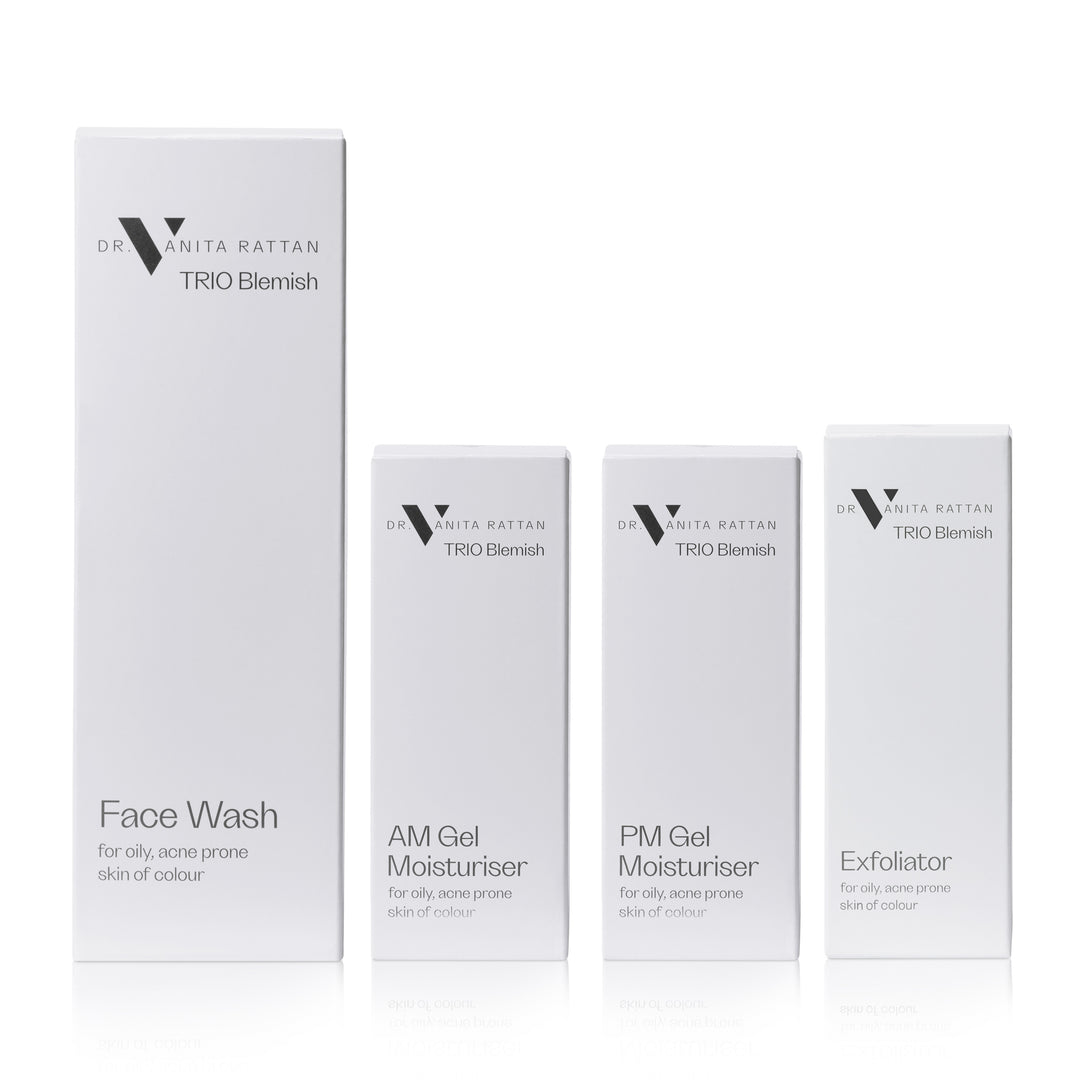
- 2. Choose your active based on your concern. For stubborn brown post-acne marks, use a pigmentation-focused routine such as the Facial Pigmentation Kit, which combines multiple pigmentation-focused ingredients designed for melanin-rich skin. If you are still experiencing active blemishes as well as marks, TRIO Blemish PM Gel may be more suitable as a targeted night product, depending on your skin and routine.
- 3. Moisturise. Finish with Cera Pep Moisturiser to keep the barrier supported while using active ingredients.
Shop the routine
For post-acne marks on melanin-rich skin, Skincare by Dr V recommends a simple, barrier-supporting routine:
Always introduce active products slowly and use sunscreen every morning.
Frequently asked questions
Post-acne marks on skin of colour can feel frustrating, but they can improve with the right routine.
The key is to understand whether you are dealing with brown marks, red marks or both. Then focus on calming inflammation, supporting the barrier, using pigmentation-focused ingredients and wearing daily mineral SPF. For melanin-rich skin, gentle consistency is more effective than aggressive treatment.
Dr Vanita Rattan is a doctor, cosmetic formulator and author of Skin Revolution with HarperCollins. She specialises in skincare for melanin-rich skin and founded Skincare by Dr V to create evidence-led products for Black and brown skin tones. Her work focuses on common concerns in skin of colour, including hyperpigmentation, post-inflammatory pigmentation, melasma, uneven tone, barrier health and mineral sunscreen.
 Back to Dr. V's Skin of Colour Blog