


Is Your Vitamin C Making Hyperpigmentation Worse? 5 Mistakes Damaging Melanin-Rich Skin
If you’ve spent over £100 on vitamin C only to find your skin more sensitive, breaking out, or showing dark patches you never had before, the problem may not be your brand. It may be the form. Vitamin C is one of the most powerful brightening antioxidants in skincare, but on melanin-rich skin the wrong form can quietly do the opposite of what you paid for.
On melanin-rich skin, vitamin C makes hyperpigmentation worse for two reasons. First, irritation triggers pigment: pure L-ascorbic acid works at a stinging pH of 2.5 to 3.5, and every time skin of colour is irritated, melanocytes release more melanin. Second, oxidation creates a fake tan: as L-ascorbic acid degrades in air or light, it breaks down into erythrulose, the active in self-tanner, leaving a dull cast. The fix is to switch to a gentle vitamin C derivative at pH 5 to 6, in airless opaque packaging, with no denatured alcohol, fragrance or essential oils, used every morning under SPF 50.
You didn’t buy the wrong brand. You bought the most popular form of vitamin C in the world, and on melanin-rich skin, that form can quietly do the opposite of what you paid for.
Why does vitamin C make hyperpigmentation worse on melanin-rich skin?
If you have melanin-rich skin, your biology is genuinely different. Your melanocytes, the cells that produce pigment, are larger and more reactive. Dr V puts it simply: “Think of them like overprotective security guards. If you aggravate them, they don’t just glow, they attack.”
This is the irritation-to-pigmentation cascade, and it is the single most important thing to understand:
It usually is none of those. It is the serum. The standard vitamin C advice in most Western beauty guides was written for skin with a strong barrier and low reactivity. It was never written for melanin-rich skin, and that mismatch is why so many people watch their pigmentation get worse instead of better.
The 5 vitamin C mistakes damaging melanin-rich skin
Dr V sees the same five errors quietly undoing people’s progress.
When L-ascorbic acid degrades in heat, light or air, it breaks down into erythrulose, the same active used in fake tan. On fair skin it reads as orange; on melanin-rich skin that rust blends with your pigment into a dull, greyish cast. As Dr V puts it: “You aren’t glowing, you are dyeing your face.”
Vitamin C oxidises in oxygen, and every time you unscrew a dropper cap, fresh air rushes in. Once it turns orange or brown it isn’t just ineffective, it becomes a pro-oxidant, ageing your skin faster. Only buy vitamin C in an airless pump or opaque, air-tight packaging. Pipettes are not your friend.
To penetrate, pure L-ascorbic acid has to sit at pH 2.5 to 3.5, acidic enough to sting. Using it every morning on skin of colour is “like using a mini chemical peel every morning,” thinning the barrier and triggering the very inflammation that drives pigmentation.
A serum can call itself brightening while being loaded with pigment-triggering ingredients. Dr V’s rule is NAFE-safe: No denatured Alcohol, no Fragrance, no Essential oils. Citrus oils especially are phototoxic and can burn a dark spot in sunlight. Her rule of thumb: if it smells like a fruit bowl, put it back.
Copper peptides oxidise vitamin C on contact; high-strength retinol alongside it destroys the barrier; glycolic acid flies through skin of colour and leaves hot spots. Keep morning and evening routines separated “like stubborn siblings”, vitamin C in the morning, retinol and peptides at night.
L-ascorbic acid vs derivatives: which is right for skin of colour?
L-ascorbic acid is the most researched form, but most of that research was done on Caucasian skin with a strong barrier. For melanin-rich skin, gentle derivatives are the better daily choice.
- •Potent, fast and well researched
- •Needs a stinging pH of 2.5 to 3.5
- •Daily use acts like a mini peel
- •Best for strong, non-reactive skin & in-clinic peels
- •Stable and far gentler
- •Work at a skin-friendly pH of 5 to 6
- •Convert inside the skin, no sting
- •Best for melanin-rich, sensitive & rosacea-prone skin
If your barrier is already damaged, stop vitamin C entirely, repair the barrier first, then reintroduce with the gentlest derivative. On reactive skin, gentle and consistent always beats strong and irritating.
The best vitamin C derivatives for melanin-rich skin
These are the forms to look for on the back of the packaging.
Oil-soluble and very stable, penetrating to the dermis to stimulate collagen. Ideal for normal to dry skin, and Dr V’s personal favourite.
Stable, low irritation, with strong and growing clinical evidence. An excellent brightening partner.
Water-based and antibacterial, excellent for acne-prone, melanin-rich skin.
Extremely gentle and brightening, without irritation.
The slowest-converting and gentlest of all, ideal for compromised barriers and rosacea.
Mainstream brands often avoid these forms, not because they don’t work, but because, as Dr V notes, “20% L-ascorbic acid looks better on the label.”
How to use vitamin C correctly on melanin-rich skin
The right product still needs the right routine.
- 1Morning only. Cleanse, apply vitamin C, then moisturiser, then SPF 50, ideally a mineral sunscreen, which is anti-inflammatory compared with chemical filters.
- 2Never combine vitamin C with retinol, glycolic acid or strong AHAs on the same day.
- 3Save retinol and peptides for night. Keep your morning and evening routines fully separate.
- 4Store it correctly. Pure L-ascorbic acid belongs in a cool, dark cupboard or fridge, never the bathroom counter. A stable derivative is happy in the bathroom.
- 5Give it three months. Expect a glow fairly quickly, but real pigment change takes around three to six months of consistent daily use.
Always pair vitamin C with SPF. Brightening without daily sunscreen is like bailing out a boat without plugging the hole, the sun re-triggers the pigment you’re working to fade.
The vitamin C Dr V formulated for skin of colour
Dr V spent years looking for a serum without these problems and kept finding the same thing: brands copy-pasting each other with unstable, acidic, dropper-bottle L-ascorbic acid. So she built one from scratch for skin of colour.
The Vitamin C Glow Serum removes L-ascorbic acid entirely, so there’s no fake tan and no acidity, and uses two stable, non-acidic forms instead: 2% tetrahexyldecyl ascorbate to work in the dermis and 3-O-ethyl ascorbic acid to brighten the epidermis. Around those it adds the supporting cast melanin-rich skin actually needs: niacinamide and a ceramide complex to protect the barrier, glycerin for hydration, bakuchiol and CoQ10 for anti-ageing without retinol’s conflict, and licorice root and phytic acid for brightening and stability. It’s NAFE-safe, pregnancy-safe, suitable for sensitive skin, and sealed in an airless pump for full potency from the first pump to the last.
I didn’t make this to add another bottle to the shelf. I made it because my patients needed a vitamin C that respects their biology instead of fighting it.
Frequently asked questions
Before you buy another vitamin C, flip the bottle over. If it’s L-ascorbic acid in a dropper that stings, now you know why your pigmentation never budged.
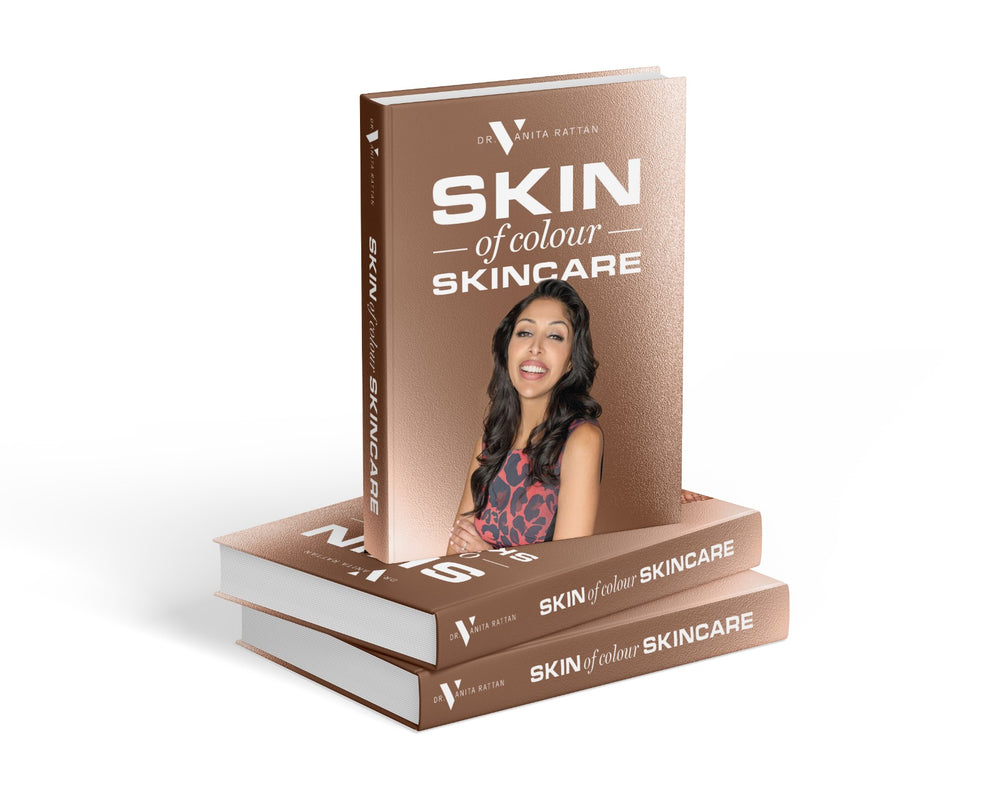
Dr Vanita Rattan is a medical doctor and cosmetic formulator specialising in skincare for skin of colour. She is the author of Skin Revolution (HarperCollins) and has treated over 40,000 patients with hyperpigmentation. She develops evidence-based skincare and education focused on melanin-rich skin and pigmentation-prone concerns through Skincare by Dr V.
 Back to Dr. V's Skin of Colour Blog