


How to Lighten Dark Underarms on Black Skin
You’ve tried switching deodorants. You tried lemon juice (a big mistake). You tried scrubbing, and it looked brighter for a day before the darkness came back. Maybe you’ve stopped shaving, maybe you’ve given up on short-sleeved tops altogether.
Dark underarms on melanin-rich skin are usually post-inflammatory hyperpigmentation (PIH), meaning pigment laid down in response to daily irritation, not dirt. The biggest hidden cause is fragrance in your deodorant. To lighten them: stop the irritation first (fragrance-free deodorant, no scrubbing or DIY remedies, use a ceramide-rich moisturiser), then fade the marks with tyrosinase inhibitors like alpha arbutin, niacinamide and azelaic acid. Expect 8–16 weeks for the protocol, and 4–6 months for deep pigmentation.
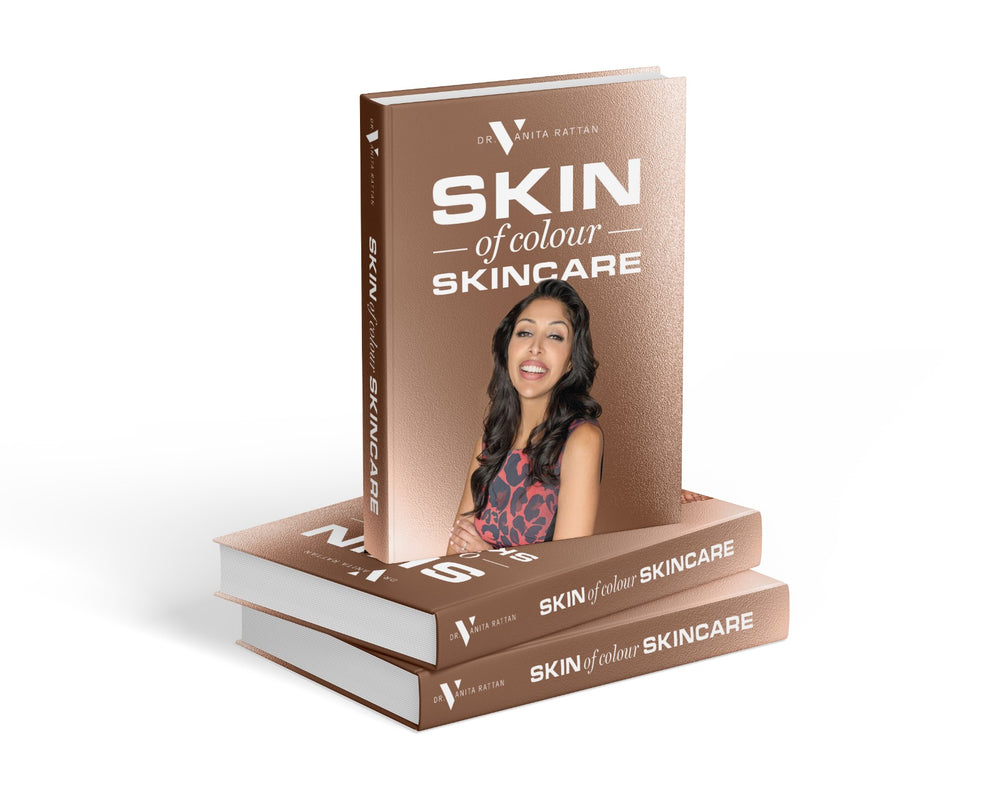
According to Dr Vanita Rattan, a medical doctor and cosmetic formulator who has treated over 40,000 patients with hyperpigmentation, the cause is something almost no one thinks to check.
It’s not the shaving, and it’s not that you need to exfoliate more. It’s one daily mistake that almost every woman with melanin-rich skin is making right now, and it’s not your fault, because nobody ever told you to read the back of your deodorant.
What causes dark underarms on Black and brown skin?
Dark underarms in skin of colour are almost always post-inflammatory hyperpigmentation (PIH), meaning your skin deposits extra pigment in response to irritation. It is not dirt, and it is not poor hygiene.
Dr V explains that the reason melanin-rich skin reacts this way comes down to the pigment cells themselves. “When your underarm skin gets irritated from anything, your melanocytes get triggered. Melanocytes are the cells that produce pigment, and in Black and brown skin those cells are bigger, more active, and more sensitive to inflammation.”
The irritation doesn’t need to be dramatic. You don’t need a rash, itching or burning. As Dr V puts it, “subclinical inflammation, inflammation you cannot see or feel, is enough.” It builds slowly, with every irritation adding a little, every single day, for years.
Why fragrance is the hidden trigger
The number one hidden irritant in most deodorants is fragrance. Not “strong-smelling” fragrance, but fragrance listed in the ingredients. It’s the most common cause of contact dermatitis, and on melanin-rich skin it drives PIH.
The difficulty is that it’s rarely written plainly as “fragrance.” Formulators list the individual fragrance chemicals instead, so these are the names to look for:
That’s fragrance touching melanin-rich underarm skin two to three times every single day. And slowly, consistently, it deposits more melanin, more darkness.
The other two triggers: aluminium and friction
Fragrance is the big one, but two others work alongside it.
Look for aluminium chlorohydrate or aluminium zirconium. They block sweat glands; some skin tolerates them, some doesn’t. In melanin-rich skin, that low-grade irritation feeds straight into the pigmentation pathway.
Underarm skin folds and rubs every time you move, keeping melanocytes switched on. It’s also why a weak, dry barrier makes everything worse, since less cushioning means more friction.
So every day you’ve got fragrance, aluminium and friction working against you, while you’re trying to treat the darkness on its own.
The 5 daily mistakes making your underarms darker
Dr V sees the same habits sabotaging progress again and again.
Scrubbing causes microtears, microtears cause inflammation, inflammation triggers pigment. Put the scrub down.
Shaving already inflames the area; deodorant on top adds fuel. Wait at least 30 minutes; an hour is better.
Lemon juice, baking soda and apple cider vinegar all disrupt your skin barrier and worsen darkening. Please stop.
A weak barrier means more friction, more inflammation, more PIH. Skin of colour lacks ceramides, the fat barrier that locks in water and lets skin glow, so your underarms need ceramides too.
The one that resets everyone’s progress. If you fade pigment with serums but keep applying a fragranced deodorant every morning, you deposit new pigment as fast as you remove the old. Stop the irritation and treat the mark at the same time.
Which deodorants are safe for melanin-rich skin?
Dr V checked the ingredient lists (none of it sponsored), and these fragrance-free deodorants are the ones safe for skin of colour.
The rule is simple. Flip the deodorant over — if you see fragrance, parfum, or any of the chemicals listed earlier, put it back.
The brightening protocol
Barrier repair, morning and night, is non-negotiable, and consistency beats intensity.
- 1Warm shower, not hot
- 2Pat dry gently, don’t rub
- 3Ceramide-rich moisturiser
- 4Fragrance-free deodorant
- 5Mineral SPF 50 if exposed to sun
- 1Gentle, non-stripping cleanse
- 2Brightening serum (alpha arbutin or niacinamide)
- 3Azelaic acid 2–3 nights a week
- 4Ceramide moisturiser
On the SPF step, Dr V is firm that the type of sunscreen matters for pigmentation-prone skin: she recommends a mineral sunscreen over a chemical one, because the zinc oxide in mineral SPF is anti-inflammatory and inflammation drives pigmentation. Mineral SPFs are few and tend to leave a white cast, which is why she formulated InZincable, a mineral SPF 50 with no white cast and anti-pigmentation actives built in for skin of colour.
I always recommend a mineral sunscreen over a chemical one if you have pigmentation in skin of colour. Inflammation is a large part of why you get pigmentation, and zinc oxide is anti-inflammatory.
Do this protocol for 12 weeks and you should start to see lightening. For anyone who wants to go a level up, Dr V formulated the Body Pigmentation Kit, combining ten tyrosinase inhibitors for skin of colour, as the final stage after the cheaper drugstore alternatives. Like everything she makes, it’s fragrance-free, essential-oil-free, and suitable for localised pigmentation on the underarms.
How long does it take?
Patience matters, pigment fades over skin cycles, not overnight.
When to see a doctor
Most underarm darkening is PIH from irritation and responds to the protocol above. But there’s one pattern worth flagging to a professional.
If your underarms (and often your neck, groin or knuckles) have darkened into thick, velvety patches, that can be acanthosis nigricans, associated with insulin resistance, not simple irritation. It won’t respond to a brightening routine alone, so see your doctor; it can be a useful early signal worth investigating. (This is also specifically not suitable for the Body Pigmentation Kit.)
Frequently asked questions
A medical doctor and cosmetic formulator who specialises exclusively in skin of colour. She has treated over 40,000 patients with hyperpigmentation and formulates evidence-based, NAFE-safe skincare, meaning no denatured alcohol, no fragrance, no essential oils — designed for pigmentation-prone, melanin-rich skin.
 Back to Dr. V's Skin of Colour Blog